
Esaurito


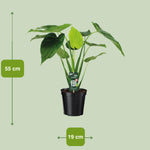


🌿 Alocasia cucullata – Orecchio d'Elefante
Hai scelto la splendida Alocasia cucullata, una parente leggermente più piccola e maneggevole delle gigantesche Alocasie, spesso chiamata con l’affascinante nome comune Orecchio d’Elefante. Questa pianta elegante è perfetta per aggiungere un tocco tropicale e lussureggiante a qualsiasi ambiente interno.
La tua Alocasia è radicata in un vaso da 19 cm e raggiunge un’altezza considerevole di circa 55 cm, diventando una pianta di medie dimensioni ideale come elemento decorativo.
🌿 Aspetto e fogliame sempreverde
L’Alocasia cucullata è una pianta sempreverde originaria delle regioni tropicali del Sud-Est asiatico. Si distingue per le sue foglie a forma di cuore o leggermente a freccia, di un verde brillante e lucido. A differenza di altre Alocasie, le foglie della cucullata crescono erette, conferendo alla pianta un aspetto architettonico e scolpito. Il termine "hooded" (a cappuccio) deriva dal modo unico in cui le nuove foglie emergono, arrotolate a forma di piccolo cappuccio.
La pianta non fiorisce in modo significativo quando è coltivata in casa, poiché la sua bellezza risiede interamente nel fogliame. Non possiede spine e non è nota per emettere profumo rilevante.
🌿 Luce, posizione e cura
Come tutte le Alocasie, questa pianta prospera in condizioni che ricordano il sottobosco della giungla: luce brillante indiretta. Predilige una posizione al riparo dal sole diretto e intenso, che potrebbe facilmente bruciare le foglie sottili.
La cura dell’Alocasia cucullata richiede attenzione a umidità e irrigazione: il terreno deve rimanere costantemente umido, ma mai inzuppato o fradicio, per evitare il marciume delle radici. Annaffia quando lo strato superiore del terriccio inizia appena ad asciugarsi al tatto.
Per favorire una crescita vigorosa, puoi somministrare un concime liquido bilanciato durante la stagione vegetativa (primavera ed estate), circa una volta al mese, diluito a metà della dose consigliata. La pianta predilige ambienti caldi e umidi, quindi evita correnti fredde o spifferi.
⚠️ Avvertenza: l’Alocasia cucullata è tossica se ingerita. Contiene cristalli di ossalato di calcio insolubili che possono causare irritazione, gonfiore e disturbi digestivi in caso di ingestione da parte di persone o animali domestici. Posiziona la pianta fuori dalla portata di bambini e animali curiosi.